Foundation repair help for Rockwall, Rowlett and Wylie
Your house sits on some of the most movable clay in North Texas. It shrinks in a dry summer and swells when the rain comes back. If you're seeing new cracks, doors that won't latch, or a floor that's started to slope, we'll put you in touch with one local foundation contractor who works your side of Lake Ray Hubbard. Not a list of five companies calling you at once.
Call (972) XXX-XXXX Tell us what you're seeing
Calls may be recorded. We call you back first. We share your details with a contractor only after you say yes, and we tell you who it is.
Signs worth a closer look
You don't need to panic over every hairline crack. Concrete and drywall crack a little on their own. These are the signs that usually mean the ground under the house is moving:
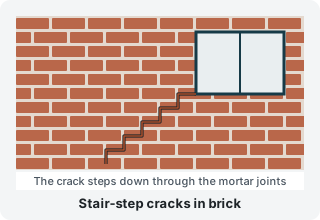
- Stair-step cracks in exterior brick, especially near corners and windows
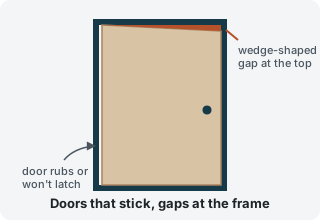
- Doors and windows that stick or won't latch, when they used to
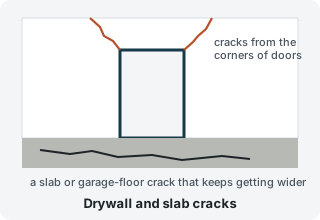
- Gaps opening between the wall and ceiling, or around window trim
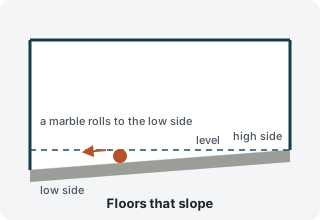
- Floors that slope or feel springy, or tile that cracks in a line
- Cracks in the slab or garage floor that keep getting wider
- Water pooling against the foundation after rain
If you're seeing two or more of these, it's worth having someone look at it. See what an inspection involves.
Why foundations move out here
Most of Rockwall, Rowlett and Wylie is built on Blackland Prairie clay: Houston Black, Heiden and Ferris soils, according to USDA soil maps. These clays swell when they're wet and shrink when they dry out. In a dry year, Houston Black clay can crack open half an inch to four inches wide and at least a foot deep, and the cracks can stay open for three to five months.
When that happens unevenly, say the back of the house dries out faster than the front, or a tree pulls moisture from one corner, the slab moves with it. That's why calls to foundation companies in North Texas tend to pick up from July through October.
The houses differ too. Half of Rowlett's homes were built before 1998. Most of Wylie's went up after 2000. Rockwall is in between. A 1985 slab and a 2008 post-tension slab don't fail the same way, and a good contractor will tell you which one you have.
Your city: Rockwall · Rowlett · Wylie
How it works
- Tell us what you're seeing. Call or use the short form. It takes about two minutes.
- We call you back first. We'll hear what's going on. If you want a contractor to look at it, we'll name the one independent local contractor we'd refer you to in your city, and share your details only after you say yes. Your details aren't sold to a list.
- They look at the house and explain their findings. They should walk you through what they measured, what they recommend and why. You decide what happens next.
We may be paid by the contractor for the referral. You don't pay us anything. How this works.
What we can help with
Foundation inspection
Not sure whether it's settling, a plumbing leak or nothing serious? A contractor inspection usually includes a floor-elevation survey and a look at drainage. For a home purchase or a big decision, we'll also tell you when it's worth paying an independent engineer.
House leveling: slab and pier-and-beam
Most newer homes here are on slabs, usually lifted with piers. Older homes with a crawlspace are often pier-and-beam, where repairs are more about shims, beams and supports.
What it costs
Published DFW guides put most residential foundation repairs between about $4,000 and $15,000, with a typical slab pier job around $5,000–$8,500. Minor crack repair can be $500–$2,000. No number online is a quote.
Straight answers before anyone comes out
- Ask for the elevation readings. A contractor should be able to show you the floor-level numbers they took, not just say "it's sinking."
- Ask what's causing it. Piers fix the symptom. If drainage, a leaking pipe or a thirsty tree is the cause, that needs fixing too.
- Get the warranty in writing and ask whether it transfers if you sell.
- Consider an independent engineer if you're buying the house, if quotes disagree wildly, or if someone recommends a lot of piers. The company that sells piers isn't a neutral judge of how many you need.
Common questions
What does foundation repair cost in Texas?
DFW cost guides put most jobs between about $4,000 and $15,000, with typical slab pier jobs around $5,000–$8,500 (8–12 piers). Major repairs can run $12,000–$25,000 or more. Drainage corrections and root barriers are often added on top.
Does homeowners insurance cover foundation repair?
Usually not for normal soil movement. The Texas Department of Insurance lists earth movement among the things most policies don't cover. Some policies do cover damage from a sudden plumbing leak, and some companies sell a foundation or slab endorsement. Check your policy or ask your agent.
When is the best time of year for foundation repair?
Work can be done year-round. Demand peaks in late summer and fall, when dry clay causes the most movement, so scheduling can take longer then. If you're seeing active movement, don't wait for a season.
Do I need an engineer or a contractor?
For a straightforward repair, many homeowners start with a contractor's inspection. If you're buying a house, getting conflicting quotes, or being told you need a large repair, an independent Texas-licensed professional engineer works for you, not for the company doing the work.
Is Two Lakes a foundation company?
No. We're a referral service. We connect you with one independent local contractor. The contractor does the inspection, gives the quote and does the work.
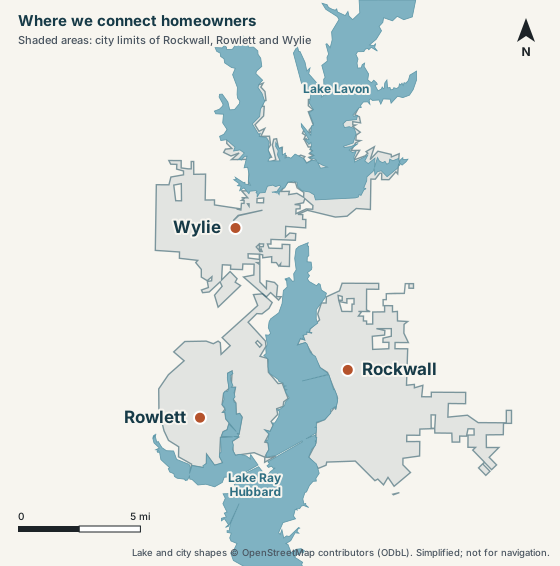
Serving the east side of Lake Ray Hubbard and up toward Lake Lavon
We connect homeowners in Rockwall, Rowlett and Wylie. If you're just outside those cities, ask anyway. We'll tell you straight if our contractor doesn't cover your street.
Send a quick request
Until it's connected, please call (972) XXX-XXXX.