Foundation inspection: what to expect
If you've noticed cracks, sticking doors or a floor that feels off, the first step is finding out whether the house is actually moving, and why. Here's what a good inspection looks like, and when it's worth paying someone who isn't selling repairs.
Call (972) XXX-XXXX Tell us what you're seeing
What a contractor inspection usually includes
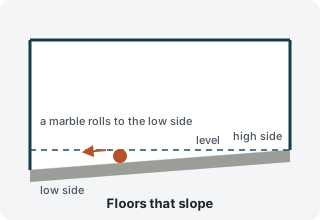
- A floor-elevation survey. The inspector takes level readings across the floor, room by room, and sketches where the high and low points are. This is the single most useful thing you'll get. Ask for a copy.
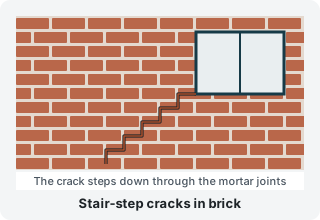
- A walk around the outside. Brick cracks, gaps at window frames, how the yard drains, where downspouts empty, and how close big trees are to the house.
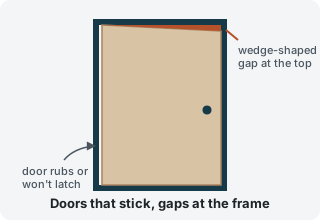
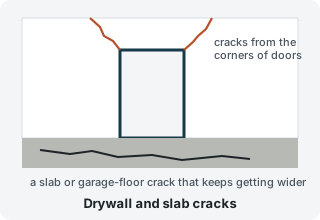
- A look inside. Door frames, drywall cracks, tile and ceiling lines.
- For pier-and-beam houses: a look in the crawlspace at piers, beams, shims and moisture.
- A recommendation and a written estimate, if they think repair is needed.
What it can't tell you
A contractor inspection is a sales visit as well as an inspection. Most foundation companies are honest, but the company that installs piers isn't a neutral judge of how many piers you need. A contractor also can't always tell from a walk-through whether a plumbing leak under the slab is part of the problem. If the readings point to one wet spot, ask whether a plumbing leak test makes sense before anyone starts lifting.
When to pay an independent engineer instead (or as well)
A Texas-licensed professional engineer (PE) who doesn't sell repairs works for you. It's usually worth it when:
- You're buying the house. Use your option period. An engineer's report gives you something neutral to negotiate with.
- Two quotes disagree a lot, for example 6 piers vs. 20.
- The repair is large, or the house has had repairs before and is moving again.
- You need paperwork for a sale, a warranty claim or an insurance question.
Texas doesn't license foundation repair contractors, so an engineer's seal is the only state-regulated opinion you can get.
How to get ready for the visit
- Note when you first saw each crack and whether it's growing. Photos with a date help.
- Find any paperwork from earlier repairs, including the warranty and pier map.
- Know roughly when the house was built and whether it's a slab or has a crawlspace.
- Be ready to point out where water collects after rain.
Questions to ask the inspector
- Can I have the elevation readings and the sketch?
- What do you think is causing the movement, and what else besides piers would you fix?
- What kind of piers, how deep, and why that many?
- What does the warranty cover, for how long, and does it transfer if I sell?
- Will you pull a permit if the city requires one?
Prices vary by house. See the foundation repair cost guide for published DFW ranges, or read about house leveling for slab and pier-and-beam homes.
Where we connect homeowners
- Foundation repair in Rockwall: mostly 2000s homes on Heiden and Houston Black clay
- Foundation repair in Rowlett: the oldest housing of the three, on the Lake Ray Hubbard shore
- Foundation repair in Wylie: newer homes, many now past builder warranty
Want a ballpark first? Read what foundation repair costs, or tell us what you're seeing.